admin
admin
A Ukrainian man, identified as Serhii K., has been arrested in Italy and is facing extradition to Germany on suspicion of coordinating sabotage against the Nord Stream pipelines in September 2022. German prosecutors believe the suspect used fake identities and a chartered yacht to carry out the coordinated attack, which involved a team of divers planting explosives on the pipelines under the Baltic Sea. The sabotage caused ruptures in the Nord Stream 1 and damaged the Nord Stream 2 pipelines, with investigations by Germany, Sweden, and Denmark identifying the incident as deliberate sabotage. This is an ongoing story but here is a recap of the account.
The Nord Stream Pipeline Explosions: An Act of Sabotage, a Geopolitical Mystery, and the Hunt for a Dive Team
On September 26, 2022, a series of powerful underwater explosions tore through the Nord Stream 1 and Nord Stream 2 pipelines in the Baltic Sea. The incident, quickly and universally labeled an act of “gross sabotage,” remains one of the most perplexing and politically charged events of the 21st century. While initial speculation pointed fingers in multiple directions—from Russia to the United States—the focus of the ongoing German investigation has narrowed considerably, leading to a new and complex narrative centered on a small, highly trained dive team.
Under Dark Waters-Buy the Ebook now
The Evidence: A Sailing Yacht and Traces of Explosives
The linchpin of the German investigation is a rented sailing yacht, the “Andromeda.” According to German prosecutors, a six-person team—comprising five men and one woman, including a captain, two divers, and a medic—chartered the yacht from a German company using forged identity documents. This unassuming vessel, a seemingly improbable command center for such a sophisticated attack, is believed to have been the base of operations.
Investigators reportedly found traces of explosive residue on board the yacht. Forensic analysis has identified the material as octogen, a powerful military-grade explosive also known as HMX, which was found at the underwater blast sites. This crucial piece of evidence, combined with the vessel’s tracked route through the Baltic Sea, has provided a strong basis for the “dive team” theory. The yacht’s movements were traced to the Danish island of Christiansø, a location close to the explosion sites.
The Mechanics of the Attack: A Deep and Dangerous Dive
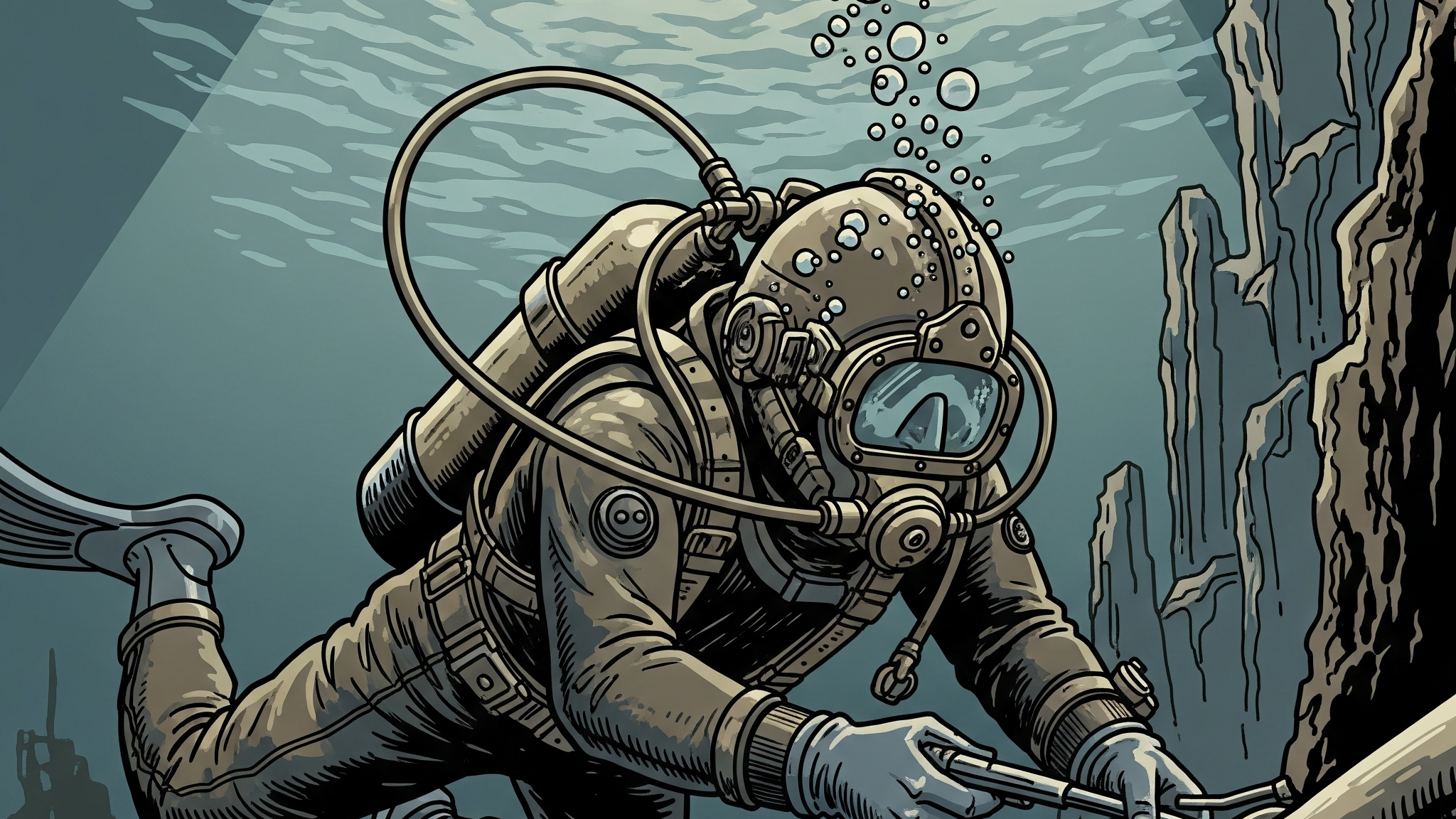
The Nord Stream pipelines lie at a depth of around 80 meters (approximately 260 feet) in the Baltic Sea. This is far beyond the reach of standard recreational scuba divers and requires highly specialized skills and equipment, a fact that highlights the professional nature of the operation.
For a dive at this depth, the team would have needed to use a specific breathing mixture of oxygen, helium, and nitrogen, known as “trimix,” to prevent nitrogen narcosis and oxygen toxicity. Each diver would have been laden with an immense amount of gear—reportedly around 220 pounds of equipment per person.
The process of planting the explosives would have been meticulously planned and executed:
- Locating the Pipelines: The team would have needed to use sonar to precisely locate the pipelines on the dark seabed. The Andromeda itself was not equipped with such a device, suggesting the team either brought their own or had a larger support vessel nearby.
- Maneuvering Explosives: The bombs themselves were estimated to be substantial, with a total explosive force equivalent to several hundred kilograms of TNT. Handling and placing these charges at such depths would have been an extremely challenging and perilous task. It would have required a coordinated effort, likely involving lift bags and specialized handling equipment to position the explosives accurately on the pipelines’ exterior.
- Decompression: The most dangerous part of the operation would have been the ascent. Divers cannot simply return to the surface from 80 meters. A rapid ascent would cause a fatal decompression illness, or “the bends.” The divers would have needed to perform a lengthy, multi-stage decompression process, taking several hours and requiring them to switch to different gas mixes at various depths.
The fact that the team allegedly used a small sailing yacht for this complex mission has led some experts to question the theory, arguing that a more robust vessel with a decompression chamber would have been necessary. However, others suggest that highly motivated, non-state actors operating outside of conventional safety protocols might have taken on the extreme risk.
The Suspects and the Lingering Questions
While the technical details of the dive operation are becoming clearer, the ultimate motive and the identity of the perpetrators remain contested. German authorities have issued a European arrest warrant for a Ukrainian national, a man with diving expertise who they believe was one of the divers. His recent arrest in Italy represents a significant breakthrough, but he has reportedly refused extradition to Germany.
Ukraine has consistently and vehemently denied any involvement. The possibility of a “false flag” operation, designed to mislead investigators and point blame toward Ukraine, has also been raised by some analysts. The presence of forged documents, the use of a civilian vessel, and the complex international trail all contribute to a sense that the operation was meticulously crafted to conceal its true origin.
As the German legal process moves forward, the world waits for more definitive answers. The Nord Stream bombing serves as a chilling testament to the vulnerability of critical infrastructure and the capacity for a small, determined team to inflict immense geopolitical and environmental damage. The story of the dive team, once a fringe theory, has now become the central narrative in a high-stakes investigation that continues to unfold.
This is an ongoing story.
References (The Guardian, Wikipedia, Al-Jazeera, CBC, Newsweek, Security Council Report, UNEP)