admin
admin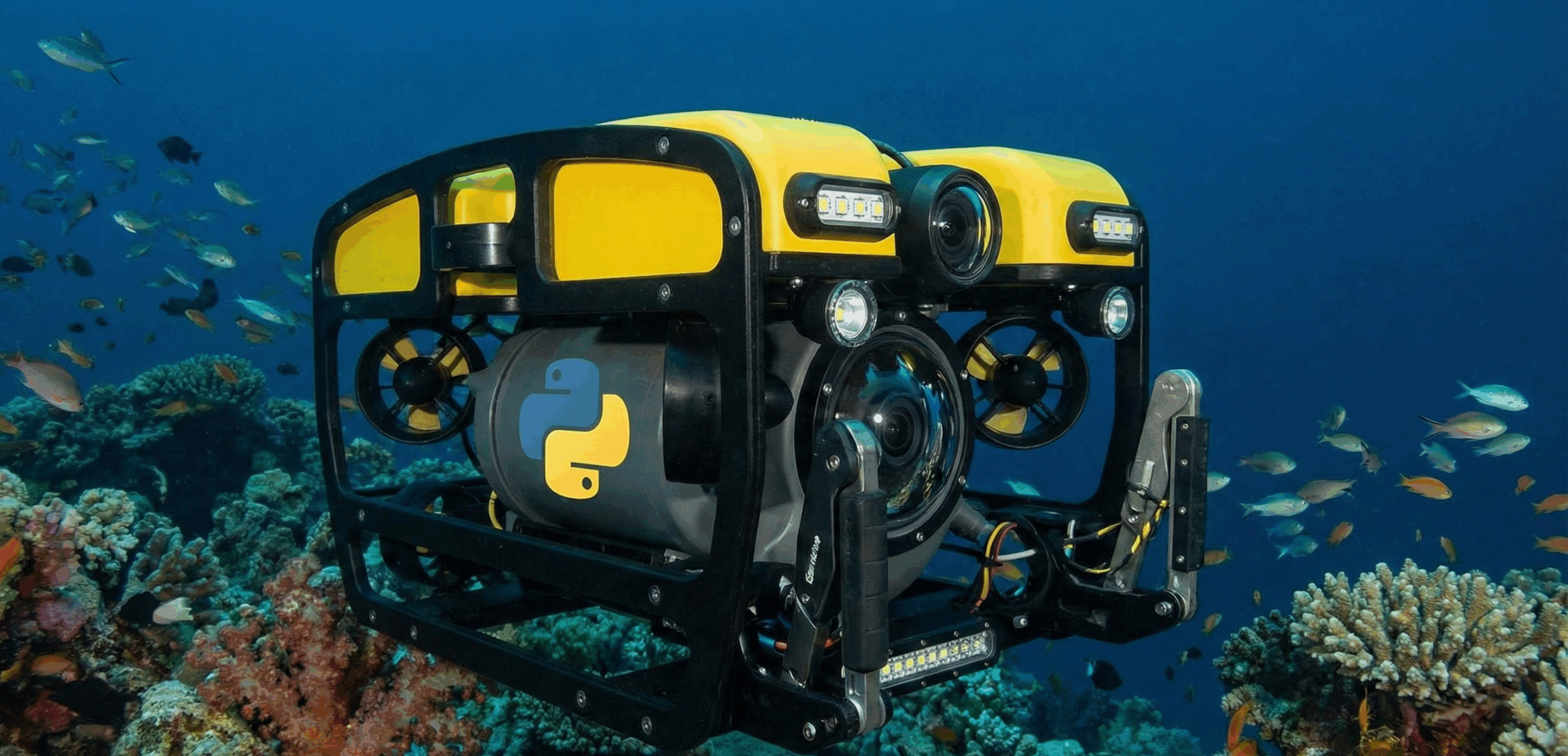
Python Powering the Future of Commercial Diving in 2025
The world of commercial diving—a high-stakes, high-risk environment essential for everything from offshore oil and gas to underwater construction and infrastructure maintenance—is on the cusp of a profound transformation.1 In 2025, the synergy of Artificial Intelligence (AI), Robotics, and Green Energy isn’t just improving safety; it’s fundamentally reshaping how, where, and when critical underwater work is performed. At the heart of this technological revolution is the Python programming language, serving as the versatile, powerful, and accessible backbone for these advancements.
Robotics and the Rise of the ‘Digital Diver’
The most visible change is the proliferation of Remotely Operated Vehicles (ROVs) and Autonomous Underwater Vehicles (AUVs). These robots are moving beyond simple inspection tasks to handle complex, dangerous, or deep-water operations, significantly reducing human exposure to hazardous conditions like extreme pressure, poor visibility, and toxic environments.
AUV Navigation and Sensor Fusion: Python’s rich ecosystem of scientific libraries is crucial here. Libraries like NumPy and SciPy handle the complex mathematical calculations for vehicle control and trajectory planning, while the OpenCV library processes visual data from cameras. More importantly, Python facilitates sensor fusion, combining data from sonar, depth, temperature, and Inertial Measurement Units (IMUs) to create a clear, real-time picture of the underwater environment.- The Pythonic Interface: Operators interact with these multi-million dollar robots through sophisticated Graphical User Interfaces (GUIs), often built using Python frameworks like Tkinter or Qt (PyQt). This allows for intuitive control, data visualization, and mission planning.
Artificial Intelligence for Predictive Safety and Maintenance
AI, primarily powered by Python’s machine learning libraries, is elevating safety from reactive response to predictive prevention. In an industry where a minor structural flaw can lead to catastrophic failure, this is a game-changer.
- Predictive Maintenance (PdM): Python libraries like Scikit-learn and TensorFlow/PyTorch are used to develop models that analyze terabytes of historical and real-time sensor data from offshore assets (pipelines, platforms, wind turbine foundations). These models learn to identify subtle patterns—such as a specific vibration frequency or minor metal stress—that precede equipment failure.2 This allows maintenance to be scheduled before a catastrophic event, maximizing uptime and diver safety.
- Image Recognition for Fault Detection: AI models are trained on thousands of underwater images (corrosion, cracks, biofouling) captured by ROVs.3 Using Convolutional Neural Networks (CNNs) implemented in Python, the system can automatically flag anomalies with high accuracy, often faster and more reliably than the human eye. This frees up human divers to focus on repair rather than exhaustive search.
- Logistics and Risk Assessment: AI can process real-time weather, current, and tidal data to calculate the optimal, safest, and most energy-efficient “dive windows,” managing risk more dynamically than traditional methods.
Under Dark Waters -Get the audio-book here!
Green Energy: A New Frontier for Underwater Work
The global pivot towards sustainable energy—specifically offshore wind, tidal, and wave energy—has created a massive, new demand for commercial diving services. This shift is intrinsically linked to Python-driven technology.
- Subsea Cable Laying and Inspection: Offshore wind farms require vast networks of subsea cables.4 ROVs, controlled by Python-based systems, are used for precision cable burial and subsequent long-term inspection. The need for acoustic and electromagnetic surveying is immense, with Python’s data processing tools analyzing the complex signal data to ensure cable integrity.
- Data Acquisition and Management: Green energy assets generate continuous streams of data (power output, structural stress, environmental impact). Python is the dominant language for building the data pipelines that ingest, clean, and analyze this information, often running on cloud infrastructure with tools like Pandas and Dask. This provides the data-driven insights needed for efficient green infrastructure management.
Why Python? The Critical Advantage
The diving industry’s rapid technological uptake can be traced back to Python’s core strengths:
| Feature | Impact on Commercial Diving Technology |
| Simplicity & Readability | Faster development, easier code maintenance, and lower barrier to entry for engineers new to AI/Robotics. |
| Vast Library Ecosystem | Immediate access to powerful tools for machine learning (TensorFlow, PyTorch), data science (Pandas, NumPy), and image processing (OpenCV). |
| Portability | Code runs consistently across different hardware (from powerful topside servers to low-power AUV embedded systems). |
| Community Support | Quick troubleshooting and continuous innovation, ensuring the technology stack remains cutting-edge. |
By 2025, commercial diving is less about brute force and more about precision, data, and automation. The traditional diver will evolve into a subsea technician who works with advanced robotics and AI. This transformation, spearheaded by the quiet, efficient power of the Python programming language, ensures that the vital work of the underwater economy can be performed safer, smarter, and greener than ever before.
Sources:Lansweeper.com, Hyruleadvisory.com, energy.gov


 Scott Kilgore