admin
admin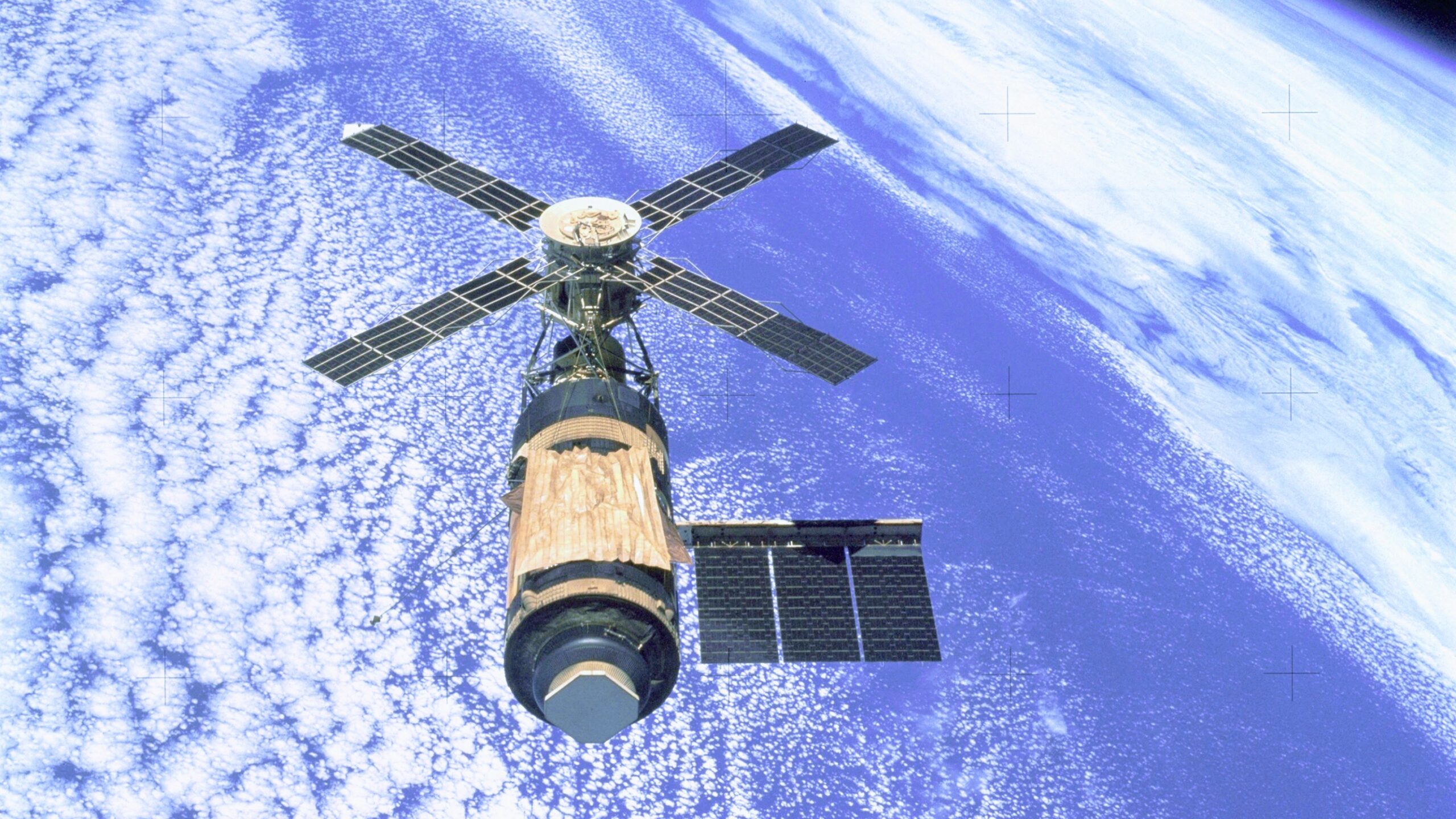
While the “blue economy” of our oceans is vital, the strategic case for prioritizing space exploration—the “black economy”—rests on three pillars: engineering scalability, the “Planetary Insurance Policy,” and a far superior rate of technological “spinoff” returns.
1. The Engineering Paradox: Why “Up” is Easier Than “Down”
At first glance, it seems counter-intuitive that sending a rover to Mars (140 million miles away) is more feasible than sending a person to the bottom of the Mariana Trench (7 miles down). However, from an engineering perspective, space is a more “friendly” environment for infrastructure.1
- Pressure Management: In the vacuum of space, the pressure differential between the inside of a spacecraft and the outside is roughly 1 atmosphere. In the deep ocean, the pressure is nearly 1,000 atmospheres. Designing materials to withstand being “crushed” by the ocean is exponentially more difficult and expensive than designing them to “hold air” in space.2
- Visibility and Communication: Space is transparent.3 We can map distant galaxies using light and radio waves. Saltwater, however, is nearly opaque to most forms of radiation. Communicating with or seeing through the deep ocean requires acoustic or tethered systems, making large-scale autonomous exploration much harder than in the vacuum of the solar system.4
2. The Resource Ceiling: Finite vs. Infinite
The ocean offers resources like oil, natural gas, and rare-earth minerals on the seabed.5 However, these are finite and their extraction often carries a heavy ecological price tag on our own biosphere.
Read the book about what commercial Diving is really about.
- Asteroid Mining: A single metal-rich asteroid, such as 16 Psyche, is estimated to contain enough gold, iron, and nickel to dwarf the entire global economy. Investing in space is an investment in the “infinite” resource pool of the solar system, which can be harvested without disturbing Earth’s delicate ecosystems.
- Energy Generation: While tidal and offshore wind are great, they are limited by Earth’s geography. Space-based solar power—collecting sunlight where it is 24/7 and “beaming” it down—could provide a carbon-neutral energy source that bypasses the limitations of day/night cycles and weather.
3. The “Planetary Insurance Policy”
Investing in the ocean improves our life on Earth, but it does nothing to protect us from external threats. Space exploration is the only investment that addresses existential risks.
- Planetary Defense: We cannot stop an asteroid or a comet from hitting the ocean floor if we aren’t in space to detect and deflect it.
- Multigenerational Survival: As Stephen Hawking famously noted, humanity needs to become a multi-planetary species to avoid extinction from local catastrophes (pandemics, nuclear war, or environmental collapse).6 An underwater city is still vulnerable to every disaster that strikes Earth; a Mars colony is not.7
“The Earth is the cradle of humanity, but one cannot live in a cradle forever.” — Konstantin Tsiolkovsky
4. Economic Multipliers and “Spinoffs”
Space exploration acts as a “pressure cooker” for innovation because the constraints are so extreme. The “spinoff” technologies from space programs have historically provided a massive return on investment (ROI).
| Industry | Space-Derived Innovation |
| Medicine | MRI and CAT scan technology, digital image sensors, and robotic surgery. |
| Environment | Advanced water purification (used in disaster zones) and global climate monitoring. |
| Safety | Firefighting gear, shock absorbers for buildings, and “memory foam.” |
| Communication8 | Global GPS, high-speed satellite internet, and precision weather forecasting.9 |
While ocean exploration produces marine biology insights, the rigorous demands of keeping humans alive in a vacuum have yielded a broader spectrum of commercial technologies that drive the modern global economy.
Summary: The Final Frontier
Investing in the oceans is about maintenance; investing in space is about expansion. While we must not neglect our home, space exploration provides the tools, resources, and “backup” that ensure there is a future humanity left to care for the oceans in the first place.
Sources: https://hellospace.ist/, https://oceanexplorer.noaa.gov/why-exploration-matters/