admin
admin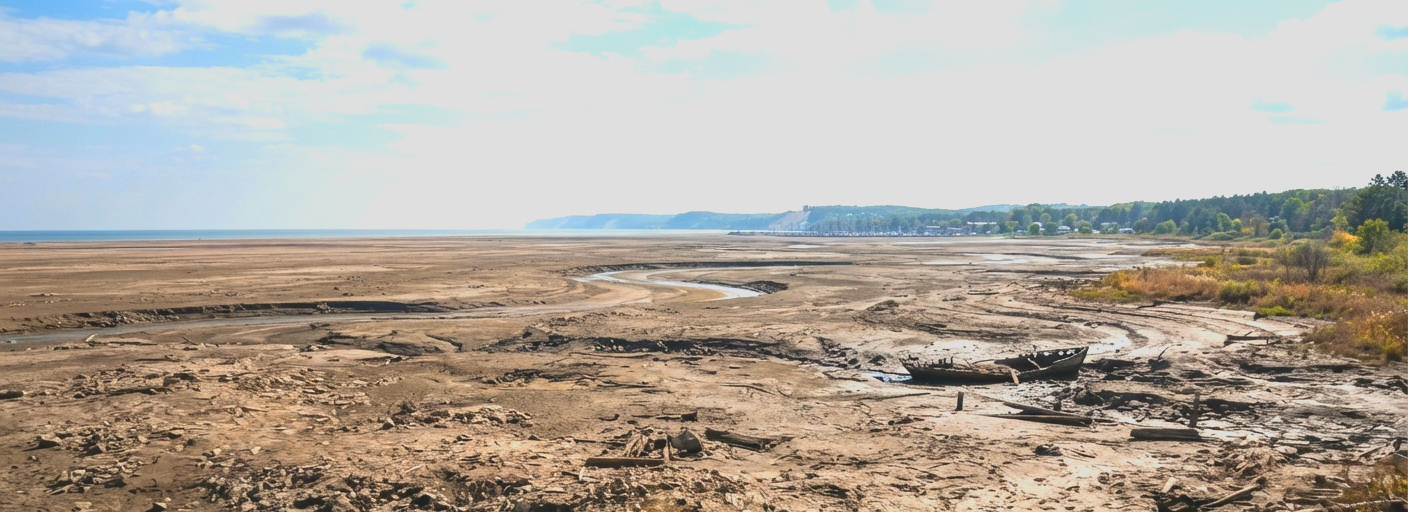
The Great Lakes hold roughly 20% of the world’s surface fresh water—an immense six quadrillion gallons that act as the ecological and economic heartbeat of North America. While these massive inland seas naturally fluctuate, a severe and sustained loss of water would trigger an environmental and economic crisis felt across the globe. [1, 2]
If the Great Lakes started losing significant volumes of water to accelerated evaporation or disrupted water cycles, the consequences would fundamentally alter the continent. [3, 4]

───
- The Global Supply Chain Would Stall
The Great Lakes serve as a commercial highway for massive freighters carrying iron ore, grain, and coal. These ships rely on precise navigation depths. [5, 6]
- The Loading Penalty: For every single inch of water depth lost, a standard Great Lakes vessel is forced to shed about 270 tons of cargo to avoid running aground. [5] Economic Ripple Effects: A significant drop in lake levels would force shipping companies to run lighter loads and schedule more frequent trips. This would cause regional transportation costs to skyrocket, driving up the price of raw materials and energy globally. [2, 5, 7]
- Chaotic and Extreme Weather Shifts
The sheer volume of the Great Lakes regulates the climate of the surrounding states and provinces, creating a stabilizing buffer known as a “lake effect”. Without this massive thermal mass to absorb summer heat and release it slowly in the winter, the region’s climate would become volatile. [2, 4, 8, 9]
- Temperature Extremes: Winters would become drastically colder, and summers would grow intensely hotter.
- The Death of Lake-Effect Snow: While less snow might sound appealing to locals, the sudden evaporation of lake-effect precipitation would collapse regional winter tourism and alter soil moisture required for agriculture. [9, 10]
- Ecological Collapse and Wildlife Devastation
The shallow, nearshore wetlands of the Great Lakes are vital nurseries for biodiversity. A dropping water line would isolate these critical habitats. [11, 12]
- Drying Wetlands: Millions of migratory birds depend on coastal marshes for staging and nesting. As water recedes, these wetlands would dry out, break apart, and become choked by invasive plant species like Phragmites. [9, 12] Fishery Failures: Prized native fish species like walleye and perch spawn in shallow reef areas. Lower water levels would leave these grounds exposed or too warm, destroying fish populations and collapsing the multi-billion-dollar fishing industry. [2, 11]
- A Disappearing Water Supply
More than 40 million people rely on the Great Lakes basin for fresh drinking water and municipal use. As shorelines recede, the physical infrastructure of the region would fail. [10]
- Stranded Intakes: Water filtration and treatment plants would suddenly find their intake pipes stranded above the new water line.
- Falling Groundwater: The Great Lakes are hydraulically connected to regional aquifers. As the lakes drop, local groundwater tables would plummet alongside them, causing residential and agricultural wells throughout the region to run completely dry. [3, 7, 9]
───
What the Mud Would Reveal
If the water dropped significantly, the retreating shorelines would expose an alien landscape. Miles of newly dry lakebed—composed of deep sediment, clay, and ancient glacial scars—would be exposed to the air. [9]
Centuries of maritime history, including thousands of perfectly preserved shipwrecks, would rise from the deep. However, this historical reveal would come with a toxic catch: over a century of industrial pollutants, heavy metals, and microplastics trapped safely in the cold, dark lake sediment would dry out. Toxic dust storms would soon whip off the exposed lakebeds, threatening the air quality of massive nearby urban centers like Chicago, Detroit, and Toronto. [2, 10]
The Great Lakes are often treated as permanent geographical fixtures, but their balance is fragile. A future where they lose their water is a stark reminder that these freshwater seas are not just scenic backdrops—they are the foundational life support system for North America. [2]
[1] https://www.worldatlas.com
[2] https://www.worldatlas.com
[4] https://www.worldatlas.com
[5] https://www.worldatlas.com
[6] https://watershedcouncil.org
[8] https://watershedcouncil.org
[11] https://loudmobility.co.uk
[12] https://www.miwildlife.org