admin
admin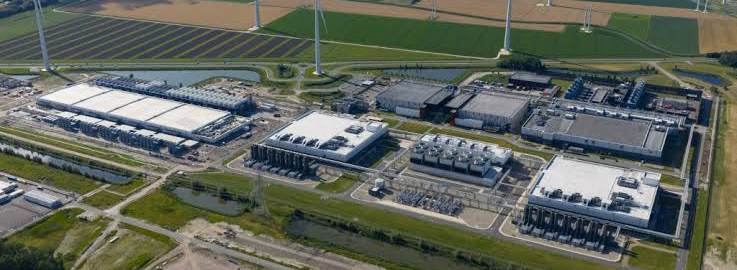
How AI Data Centers Are Eyeing the Great Lakes’ Water
We often think of the Great Lakes as an unshakeable fortress of freshwater—a massive inland sea holding roughly 20% of the world’s surface fresh water. For decades, residents and policymakers have fiercely protected this bounty from out-of-basin diversions and heavy industrial pollution.
But a new kind of heavy industry is quietly moving into the Midwest, and it doesn’t need to ship its products out on cargo freighters. Instead, it runs on electricity, generates immense heat, and consumes millions of gallons of water a day.
Welcome to the era where Big Tech meets the Great Lakes basin.
Why the Great Lakes Region?
As data center hubs in regions like Northern Virginia and drought-stressed Arizona face severe water deficits and power grid limits, tech giants are setting their sights on the Midwest. The appeal is obvious: a cooler climate, abundant municipal infrastructure, and proximity to the vast freshwater reservoirs of the Great Lakes.
Between the explosive rise of generative AI and cloud computing, tech companies are building hyperscale data centers at an unprecedented pace. To keep thousands of servers from melting under continuous computation, these facilities require heavy-duty cooling systems.

The Real Math: Millions of Gallons a Day
A single hyperscale data center can burn through anywhere from 1 million to 5 million gallons of water a day—roughly equivalent to the daily water usage of a small city. Over the course of a year, a single facility can consume upwards of 365 million gallons.
The critical catch lies in how that water is used:
- Consumptive Use: Most large data centers rely on evaporative cooling towers. They draw water from local municipal supplies or aquifers, use it to absorb heat, and vent it into the atmosphere as water vapor.
- Gone for Good: Unlike traditional industrial manufacturing plants that treat and return water back to local rivers or lakes, data center cooling water is largely lost to the local watershed permanently.
The Local Vulnerability: It’s Not Just About the Lakes, It’s the Aquifers
It is a common misconception that data centers are dropping giant straws directly into Lake Michigan or Lake Superior. Instead, most tap into local municipal water systems and groundwater aquifers.
In every Great Lakes state, a massive percentage of residents depend on groundwater for their daily drinking water. When multiple data centers cluster within a specific watershed or county, they put immense stress on local municipal utility systems and deplete regional aquifers. The result? Dropping local water tables, strained rural wells, and heated competition between local residents, agriculture, and tech corporations.

The Transparency “Black Box”
Compounding the environmental strain is a severe lack of public visibility. When data centers plug directly into local municipal water networks rather than drawing as direct industrial extractors, their daily water footprints often disappear into a regulatory “black box”. Bound by non-disclosure agreements with local economic development boards, exact usage figures and resource forecasts are routinely shielded from the public. Residents are often left in the dark about how a massive new facility will impact their local utility rates and water security until construction is already underway.
Striking a Balance Before It’s Too Late
The Great Lakes region does not have to slam the door on tech innovation, but the current rush for data center development is happening faster than local and state policies can adapt. Safeguarding our freshwater future requires commonsense guardrails:
- Mandatory Transparency: Full public disclosure of projected energy and water use before local tax subsidies or zoning permits are approved.
- Advanced Efficiency Standards: Mandating closed-loop, water-free, or low-water cooling alternatives wherever climate permits, rather than defaulting to the cheapest evaporative models.
- Protecting the Grid and Ratepayers: Ensuring that the massive costs of upgrading local water and electrical grid infrastructure to support tech giants aren’t quietly passed down to everyday residential utility payers.
- Comprehensive Watershed Cumulative Impact Studies: Requiring regional environmental protection agencies to evaluate the cumulative drain of multiple data centers within the same aquifer basin, rather than reviewing each facility in an isolated silo.
- Stringent Water Return Mandates: Exploring policy mechanisms that require tech developers to offset their consumption or invest heavily in local water restoration and green infrastructure projects.
The Great Lakes are a resilient ecosystem, but they are not infinite. As the digital cloud takes physical root in our backyards, it’s time to ask ourselves: Are we managing our most precious resource with the future in mind, or are we giving away our water to fuel the next tech gold rush?
References
- Energy and Environmental Study Institute (EESI) – Research on data center water consumption parameters, noting individual hyperscale facilities can utilize up to 5 million gallons daily.
- Alliance for the Great Lakes – Reports detailing the annual footprint of hyperscale data centers reaching roughly 365 million gallons per facility.
- Planet Detroit / Lawrence Berkeley National Laboratory – Analyses tracking direct vs. indirect water footprints of U.S. data centers and the prevalence of corporate non-disclosure agreements regarding resource data.